The People-First Approach
Adopting AI
Strategy, ethics, governance, and the future of work — the first AI adoption book grounded in behavioral science and complexity theory.
★ "Best AI Book of 2025" — Claudia Saleh, Disney
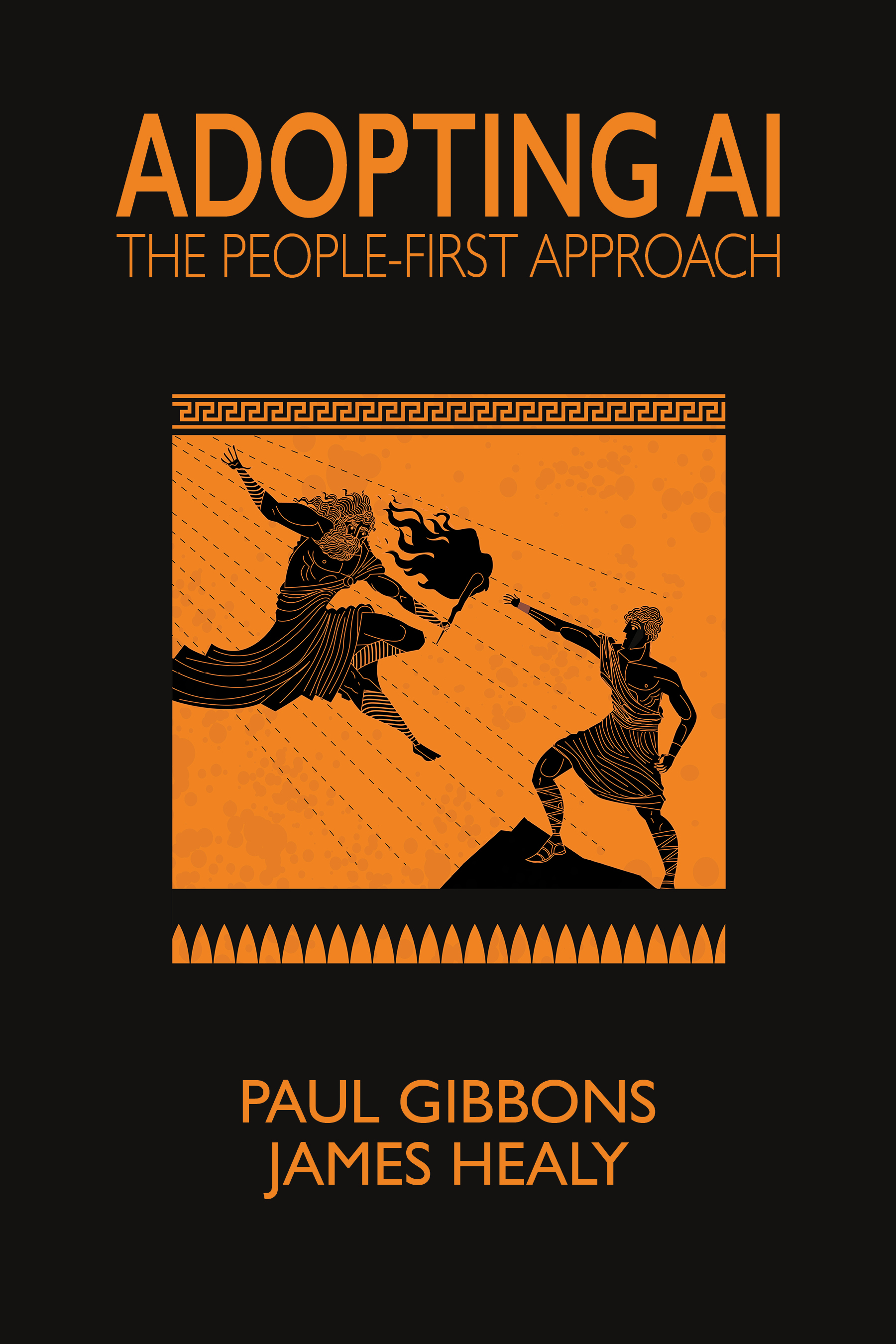
Strategy, ethics, governance, and the future of work — the first AI adoption book grounded in behavioral science and complexity theory.
Best AI book of 2025.
— Claudia Saleh, Disney
Every leader and professional should read this book. It is an easy and comprehensive read, giving a great overview of the new player on stage.
— Marcella Bremer, Future-Fit
Today business leaders will be "disrupted" by insurgents that understand the power of AI better than they do. This book will help you not be one of them.
— John Kelly, CEO, Allegient Systems
If you're a leader, educator, strategist, or just someone trying to wrap your head around AI's broader implications, this is your book. It's one of the few I've read that centers ethics, behavior, and leadership as integral, not optional.
— Fionnula O'Conor, Op-Dem Consulting
From the AI frontier to ethical governance — a complete framework for leaders who want to adopt AI without losing their people or their principles.
The case for radical optimism — and radical caution. What AI could mean for the UN Sustainable Development Goals, education, creativity, and human flourishing. And what could go wrong.
VisionFrom rule-based games to transformer architectures — a clear, non-technical history of AI for leaders who need to understand the technology without becoming engineers.
FoundationsFrontier models, agents, multimodality, and the agentic bottleneck. What's coming next and why it matters for your organization right now.
FrontierWhy most AI strategies fail the people test. A framework for building AI strategy that starts with humans — their fears, skills, and potential — not the technology.
People-First AI™The Adaptive Adoption™ model — how to deploy AI in complex organizations using principles from complexity theory and behavioral science, not traditional change management.
Adaptive Adoption™The five dimensions of AI literacy. Why training budgets are being wasted, what the WEF data says about GenAI skills demand, and how to find the human-AI sweet spot.
AI LiteracyThe three foundational ethical problems of AI: you can't explain it, you can't predict it, and it was trained on other people's work.
EthicsWhy "Responsible AI" isn't responsible enough. The gap between corporate AI ethics statements and actual deployment decisions — and a framework for closing it.
Responsible AIJob displacement, bias, deepfakes, data privacy, and surveillance — the five ethical flashpoints every organization will face. With frameworks for navigating each.
Deployment EthicsThe global regulatory landscape, AI Centers of Excellence, governance processes — and a final chapter on navigating what comes next with a people-first compass.
GovernanceConcepts originated in this book that are now shaping how organizations approach AI adoption.
Today business leaders will be "disrupted" by insurgents that understand the power of AI better than they do. This book will help you not be one of them.
John Kelly · CEO, Allegient Systems
Available now in Kindle, paperback, and hardcover.